ADA MED SUPPLY LIMITED
Phone:+86 13383897707
Tel:+86-0379-65160607
Email:adaanatomy@adaanatomy.com


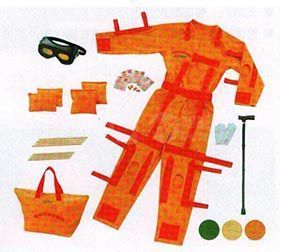
The BIX-H230 is a wearable aging simulation suit, not a manikin. A learner puts it on, adjusts the back angle, and then tries to stand, walk, dress and reach for objects while the suit resists the movement. The product page lists a washable fine-grain material, an adjustable back and body angle, and a reference price of US $353.52 before freight.
Quick answer. The H230 is for empathy and function training: it lets a learner feel restricted trunk extension and stiffened joints before caring for an older patient. It is not a patient simulator — there is no airway, no vascular access, no monitor and no programmable deterioration.
| Component | What it does to the wearer | Where it fits in a lesson |
|---|---|---|
| Adjustable back and body angle | Limits trunk extension, so standing and reaching cost more effort | Transfers, bed-to-chair, reaching for a call bell |
| Restrictive joint elements | Adds resistance at the knees and hips | Walking with an aid, stair practice |
| Goggles (shown on the product page) | Narrows the visual field | Reading labels, finding objects, medication checks |
| Crutch (shown on the product page) | Makes the gait exercise realistic | Gait and balance station |
| Weighted accessories (shown on the product page) | Adds load to the limbs and trunk | Endurance and fatigue comparison |
| Washable outer material | Allows reuse between learners | Timetabled lab sessions |
The product page describes the suit as designed around the physiological changes of older adults. Confirm the exact accessory list per order with the supplier, because the image shows goggles, a crutch, weights and a carry bag but the text does not itemise them; write to adaanatomy@adaanatomy.com with the order quantity and they will return the packing list.
A lecture can state that trunk extension declines with age. A suit makes the learner fail at a task they thought was trivial. When a student wearing the H230 tries to pick a tablet from the floor, the limitation is not knowledge, it is range and effort — and that changes how the student plans care afterwards. A randomised teaching study of an aged simulation suit reported measurable improvement in nursing students' attitudes and empathy scores after a single exposure [1], and a 2024 controlled study found a similar effect on empathy and willingness to care for older adults [2].
The second lesson is pacing. Most nursing tasks are timed, and a learner who needs three times as long to walk ten metres understands why rushed care produces falls. That experience connects directly to the geriatric assessment literature, where functional status rather than diagnosis predicts outcomes [3].
Most aging suits are a fixed garment. The H230 lets a tutor change the back and body angle, which means one suit can serve two very different lessons: a mild restriction for a first-year orientation session, and a tight restriction for a falls-and-immobilisation scenario in year three. Practically, that lets a department buy fewer units and still vary the difficulty between cohorts.
The limitation is that the angle is adjusted by hand, not calibrated. There is no scale, so two tutors cannot guarantee an identical setting, and results across groups are not comparable. Use the suit for experience, not for measurement.
Keep one suit per two learners and one spare set of straps per ten learners; the straps take the load and are the first part to fail.
| Field | Value on the product page |
|---|---|
| Model | BIX-H230 advanced wearable elderly action simulation suit |
| Category | Nursing skill models, medical series |
| Type | Wearable suit, learner-worn |
| Material | Fine-grain, washable |
| Adjustment | Back and body angle |
| Reference price | US $353.52 before freight |
| Certification | ISO 9001, ISO 14001, ISO 45001 |
Q1. Is the H230 worn by a student or by a manikin? By a student. The learner wears the suit and experiences the restriction; there is no patient body to nurse.
Q2. Can the difficulty be changed between classes? Yes. The back and body angle is adjustable, so the same suit can be set tighter for advanced scenarios and looser for first-year sessions.
Q3. Does it include goggles, a crutch and weights? The product image shows goggles, a crutch, weighted accessories and a carry bag, but the description does not itemise the contents. Ask the supplier to confirm the packing list for your order.
Q4. How many suits does a class need? Plan one suit per two learners, plus one spare strap set per ten suits. A single suit for a class of thirty means most students only watch.
Q5. Is it suitable for falls training? It is suitable for gait and transfer training with a spotter. It is not a fall-arrest device and must not be used for unspotted standing or stair work.
Q6. What is the price and how is it shipped? The reference price is US $353.52 before freight. Freight depends on the number of suits and the destination; ask for a packed carton weight with the quotation.
Contact. For a size and accessory quotation, or the ISO certificate pack for a tender file, email adaanatomy@adaanatomy.com. Product page: https://www.adaanatomy.com/nursing-model/advanced-wearable-elderly-action-simulation-suit-H230 · Nursing skill models: https://www.adaanatomy.com/nursing-skill-models · All articles: https://www.adaanatomy.com/neslist.html
