ADA MED SUPPLY LIMITED
Phone:+86 13383897707
Tel:+86-0379-65160607
Email:sophia@adahealthy.com


Article tag: Clear gastric lavage model Medical nursing model
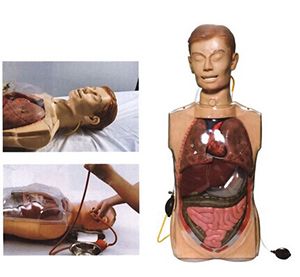
As an innovative nursing teaching tool, transparent gastric lavage model has been widely used in the field of nursing education in recent years. It is made of high-strength transparent material, simulating the structure of the upper body of the human body, especially the transparent design of the stomach, so that the operation process of gastric lavage can be intuitively displayed, greatly improving the intuitiveness and understandability of teaching.
In nursing practice, compared with the traditional teaching method of gastric lavage, it has significant advantages. First, it provides a safe and controlled learning environment. Students can practice repeatedly through the model without touching real patients, so as to master the operation skills of gastric lavage. This not only reduces the teaching risk, but also improves the practical ability of students.

Secondly, intuitiveness makes teaching more vivid and vivid. Students can clearly observe the process of gastric tube insertion, gastric fluid drainage and the effect of gastric lavage, so as to deepen their understanding and memory of gastric lavage operation. This intuitive teaching method helps to stimulate students' learning interest and motivation, and improve their learning results.
In addition, it has a high degree of simulation and operability. It simulates the anatomy and physiological functions of a real human body, allowing students to feel similar touch and pressure when practicing. This simulation not only improves students' operational skills, but also cultivates their clinical thinking and coping abilities.
To sum up, the transparent gastric lavage model has significant advantages in nursing practice, especially in providing a safe and controllable learning environment and improving the intuitiveness and understandability of teaching. However, it also has certain limitations and cannot completely replace the emotional experience and humanistic care brought by real patients. Therefore, in nursing education, we should give full play to the advantages of transparent gastric lavage model, combined with the clinical practice of real patients, in order to cultivate students' comprehensive nursing ability.
