ADA MED SUPPLY LIMITED
Phone:+86 13383897707
Tel:+86-0379-65160607
Email:sophia@adahealthy.com


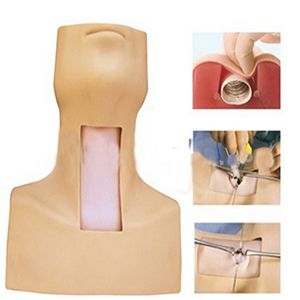
In the field of medical emergency, tracheotomy intubation is a high-risk and difficult operation. It not only requires doctors to have rich medical knowledge and skilled operation skills, but also needs to make accurate judgments quickly in emergency situations. Therefore, it is very important to select a suitable tracheal intubation training model to improve the professional skills and coping ability of medical staff.
First, it can provide a real and safe simulation environment. This model adopts advanced scientific and technological means, which can highly simulate the anatomical structure and physiological response of the human body, so that the medical staff can feel the touch and feedback similar to the real operation during the practice. At the same time, since the model is simulated, it will not cause any harm to the patient, thus ensuring the safety and reliability of the exercise.

Secondly, the training model can help medical staff to be familiar with and master the operation steps and skills of tracheotomy intubation. Through repeated practice, medical staff can gain a deeper understanding of the entire process of intubation, including key steps such as cutting the skin, separating the tissue, and inserting the catheter. This exercise not only consolidates the theoretical knowledge of the medical staff, but also improves their practical operation ability.
In addition, the training model is able to simulate a variety of complex conditions and scenarios, enabling healthcare workers to respond to a variety of emergencies in a simulated environment. This simulation exercise can not only help medical staff improve their resilience, but also enhance their self-confidence and psychological quality. In real emergency situations, medical personnel need to make quick judgments and take action, and simulation exercises are an effective exercise in their ability to do so.
Finally, the choice of a tracheal intubation training model can also reduce medical risks. In the real first aid scene, the operation of the medical staff is often faced with great challenges and risks due to the complex condition of the patient and the urgent time. By practicing with a training model, health care professionals can try and correct without putting patients' lives at risk, reducing the likelihood of making mistakes in practice.
In summary, the selection of tracheotomy intubation training model is of great significance for improving the professional skills and coping ability of medical staff. It can not only provide a real and safe simulation environment to help medical staff familiarize themselves with and master operational skills, but also simulate complex conditions and scenarios to enhance their resilience and self-confidence. At the same time, by practicing with the training model, it is also possible to reduce medical risks and ensure patient safety.
