ADA MED SUPPLY LIMITED
Phone:+86 13383897707
Tel:+86-0379-65160607
Email:adaanatomy@adaanatomy.com


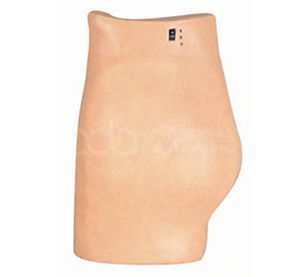
The BIX-H6T is a wearable electronic buttocks injection simulator: a PVC hip and buttock shell that a student puts on, accepts simulated injection fluid only in the correct area, and sounds an alarm when the injection site is wrong. Reference price is US $176.76; the manufacturer product number is ADA-431A.
Quick answer. The H6T is for assessing gluteal intramuscular injection technique, not for anatomy demonstration. The alarm converts "was that in the right quadrant?" from an instructor's opinion into a pass or fail. It does not measure needle depth, does not reproduce sciatic pain, and cannot teach aspiration or complication management.
| Item | Specification | Teaching consequence |
|---|---|---|
| Type | Wearable buttocks injection simulator | Injection is performed in a standing or side-lying position on a body |
| Material | PVC shell | Wipeable; simulated fluid is expelled after practice |
| Feedback | Alarm on incorrect site | Objective pass/fail without an instructor watching every needle |
| Fluid | Simulated injection liquid | Students see that the dose went into the model, not the air |
| Reference price | US $176.76 | Entry-level assessment tool, not a full manikin |
| Product No | ADA-431A | Use this number when ordering spares |
Gluteal intramuscular injection is one of the few procedures where a landmark error can cause permanent harm. Sciatic nerve injury after gluteal injection remains a persistent problem in reports from many health systems, and the ventrogluteal site is recommended precisely because it moves the needle away from the sciatic nerve.[1][2]
Teaching the difference between the dorsogluteal and ventrogluteal sites on a diagram is not enough. The student must place a hand on the iliac crest and greater trochanter, then insert at the correct angle. The H6T is shaped for that physical sequence: the student wears the shell, palpates the landmarks through the PVC, and injects.
A station of six students runs in about 25 minutes with one simulator: four minutes per attempt, two attempts each, plus a two-minute debrief.[3]
The alarm is a position check. It confirms that the needle entered the intended area of the buttock shell. It does not confirm depth, aspiration, injection speed, needle length or aseptic technique — the five things that determine whether the injection is safe in a patient.
That limitation is useful in teaching: it forces the instructor to assess technique separately, with a checklist, rather than treating the green light as competence.
Q1. Is the H6T worn by the student or placed on a table? It is a wearable simulator: the student wears the hip and buttock shell and injects into it.
Q2. How does it give feedback? An alarm sounds when the injection is not in the correct area. When the site is correct, the simulated fluid can be injected.
Q3. What material is it made of? PVC, with a removable internal reservoir for the simulated injection liquid.
Q4. Does it teach the ventrogluteal site? It supports landmark-based teaching of gluteal injection; the instructor must specify which site the student is being assessed on.
Q5. Can it measure needle depth? No. Depth, aspiration and injection speed must be assessed by the instructor.
Q6. What is the price? The reference unit price is US $176.76, subject to order quantity.
Contact. For shell sizes, spare reservoirs or a department quotation, email adaanatomy@adaanatomy.com. Product page: https://www.adaanatomy.com/nursing-model/electronic-buttocks-injection-simulator-BIX-H6T · Nursing models: https://www.adaanatomy.com/nursing-model · All articles: https://www.adaanatomy.com/neslist.html
