ADA MED SUPPLY LIMITED
Phone:+86 13383897707
Tel:+86-0379-65160607
Email:adaanatomy@adaanatomy.com

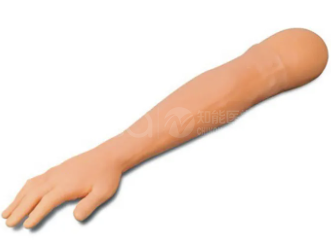
The BIX-ZC-II is a life-size adult arm trainer built around 40 upper-limb acupoints, with hidden point markers that can be switched on for teaching or off for assessment. It is a practice and testing arm, not a full-body acupuncture model — it covers the arm from shoulder to hand and nothing else.
Quick answer. The BIX-ZC-II suits acupuncture schools and hospital TCM departments that need repeated point-location practice on one limb. It is sized as an adult arm, includes a marking flashlight, and costs US $265.16 as a reference price. It does not teach needle depth, Deqi sensation, or torso and leg points.
| Item | Specification | What it changes in class |
|---|---|---|
| Model | BIX-ZC-II acupuncture training arm | One limb, adult size |
| Acupoints | 40 commonly used upper-limb points | Covers Hegu, Quchi, Lieque and the five-Shu points |
| Marking | Hidden markers, switchable | Same arm can be used for teaching and blind testing |
| Anatomy | Ulna, radius, olecranon landmarks | Students palpate bone before they palpate point |
| Skin | Soft simulated skin with texture | Needle feel is closer to tissue than plastic |
| Kit | Arm, LED flashlight, 4× AA batteries | Light reveals markers without a console |
| Reference price | US $265.16 per unit | Budget line for a 30-student cohort |
The arm covers the hand, wrist, forearm, elbow and upper arm. That range includes the points most often examined in introductory courses: Hegu (LI4), Quchi (LI11) and Lieque (LU7), plus the five-Shu categories on the arm channels. The WHO standard nomenclature lists 361 classical acupoints in total, so this model addresses roughly 11% of the classical set — enough for a limb module, not enough for a licensing exam on its own.
Because the arm stops at the shoulder, it cannot teach points on the face, back, abdomen or leg. Departments that run a full acupuncture curriculum usually pair one arm with a torso or full-body model rather than buying two arms.
Most low-cost arm models print point names on the skin. Students read the label instead of finding the landmark. The BIX-ZC-II uses concealed markers that are revealed by the supplied LED flashlight, so the same physical arm supports two different tasks:
This matters because point location is a psychomotor skill judged under exam conditions. A printed label turns a location task into a reading task, and the score stops predicting whether the student can find the point on a patient.
With one arm per two students, a 30-student class needs 15 arms. At the reference price that is US $3,974.40 before freight — a number worth putting in the purchase request rather than discovering at checkout.
Teach depth and Deqi on supervised live practice or on a full-body model with layered tissue; use the arm for location, needling angle and repetition.
Q1. How many acupoints does the BIX-ZC-II have? Forty commonly used upper-limb points, including Hegu, Quchi, Lieque and the five-Shu points.
Q2. Can it be used for exams? Yes. The hidden markers can be switched off so students locate points without labels, then revealed for scoring.
Q3. Does it include a flashlight? Yes — one professional LED flashlight and four AA batteries are included.
Q4. Is it a full-body model? No. It is a single adult arm covering shoulder to hand.
Q5. What is the price? The product page lists US $265.16 as a reference price, subject to order quantity.
Q6. Can we order replacement skin? Replacement skins are available; confirm the current lead time with the supplier before term starts.
Related on this site: acupuncture model collection · all articles
Contact. For the 40-point list, replacement skins or a quantity quote, email adaanatomy@adaanatomy.com. We reply within one business day.
