ADA MED SUPPLY LIMITED
Phone:+86 13383897707
Tel:+86-0379-65160607
Email:adaanatomy@adaanatomy.com


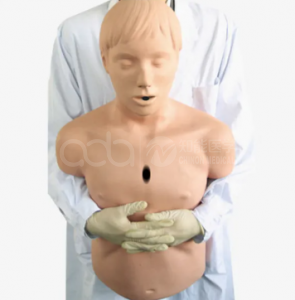
Most intubation trainers accept a tube and say nothing. BIX-J5S is built the other way round: it reports what the trainee just did. Correct placement produces an electronic display, a music prompt, inflation of both lungs and a fixed tube; incorrect technique produces a distinct display and warning — either because the tube went into the stomach, or because the laryngoscope pressed on the teeth. It also permits pupil comparison and marks the cricothyroid membrane puncture site. This guide sets out how to run a session that uses those signals rather than ignoring them.
| Item | Detail |
|---|---|
| Model | BIX-J5S |
| Type | Electronic airway intubation trainer |
| Skills | Oral intubation, nasal intubation, tube fixation |
| Correct-placement feedback | Electronic display, music prompt, both lungs inflate |
| Error feedback | Stomach inflation; laryngoscope pressure on teeth — display plus audible warning |
| Additional features | Pupil size observation and comparison; cricothyroid membrane puncture landmark |
| Price | Quoted per order |
Both lungs inflate, tone sounds, tube holds. That is a pass. The trainee should still verbalise depth and auscultation points, because the model confirms placement electronically and a patient does not.
Stomach inflation. The tube is in the oesophagus. This is the single most dangerous error in the set, and the model flags it immediately. Make the trainee withdraw, re-oxygenate and re-attempt rather than simply pulling the tube back — the habit you want is a full re-attempt with a plan.
Teeth pressure. The laryngoscope blade is being used as a lever. In a patient this fractures incisors and, more importantly, signals that the blade is not in the vallecula. Correct the hand position before the next attempt.
Pupil comparison. Useful for the sedation-and-paralysis conversation: the trainee checks pupils before and after the attempt and states what a change would mean.
Cricoid pressure and airway handling are skills that improve with simulation-based instruction rather than lecture alone; a meta-analysis of cricoid pressure training found simulation superior to non-simulation teaching for technique accuracy [1]. Structured airway programmes built on part-task trainers have been shown to raise the performance of junior physicians on a defined skill set [2]. The relevant point for BIX-J5S is narrower: feedback-linked practice is what makes those gains stick, which is why an alarm-bearing trainer earns its place over a silent one.
Quotation and spares. Current pricing for BIX-J5S, spare airway inserts and the paediatric companion units is available from adaanatomy@adaanatomy.com.
Q1. Does BIX-J5S train both oral and nasal intubation? Yes. The manufacturer lists oral cavity and nasal cavity intubation skill training as core functions.
Q2. What happens when the tube enters the oesophagus? The model displays a warning and reports stomach inflation instead of lung inflation.
Q3. Can it detect laryngoscope pressure on the teeth? Yes. Over-pressing the teeth triggers an electronic display and warning prompt.
Q4. Does it include a cricothyroid membrane landmark? Yes, the unit indicates the cricothyroid membrane puncture position, which supports rescue-airway teaching.
Q5. Is it suitable for assessment, not just practice? It reports correct and incorrect handling, so it supports formative assessment. It does not print a scored transcript.
Q6. What is the price? Quoted per order; ask for spare teeth and airway inserts in the same quotation.
For a quotation on BIX-J5S with spare airway inserts, write to adaanatomy@adaanatomy.com with your course level and the airway devices you train on.
