ADA MED SUPPLY LIMITED
Phone:+86 13383897707
Tel:+86-0379-65160607
Email:adaanatomy@adaanatomy.com


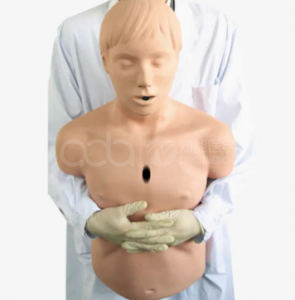
BIX-J145 is a mid-priced adult manikin that combines choking management with basic CPR, and its distinguishing feature is a carotid pulse that responds to how hard and how fast the rescuer compresses. The supplier lists a reference price of $441.88, subject to order quantity, and describes eight functions including airway obstruction simulation, spontaneous breathing, suffocation simulation, Heimlich training, carotid pulse feedback and three replaceable snout parts. This review sets out what the manikin does well in a training room, what the listing does not promise, and the checks worth making before a purchase order.
| Item | Detail |
|---|---|
| Model | BIX-J145 |
| Type | Adult airway obstruction and CPR training manikin |
| Reference price | $441.88 (subject to order quantity) |
| Airway simulation | Airway obstruction and suffocation simulation, spontaneous breathing through the airway |
| Choking skills | Heimlich manoeuvre and adult first-aid operation training |
| CPR | Chest compression and airway opening simulation |
| Feedback | Simulated carotid pulse, distinguishable in rate and strength by compression force |
| Consumables | Three replaceable snout parts per set |
| Power | DC supply |
| Certification | ISO 9001, ISO 14001 and ISO 45001 factory certification (as listed) |
Timing becomes observable. Without a pulse, a student compresses to a count and hopes. With a carotid pulse that varies with compression force, the instructor can ask the student to feel the response and adjust in real time, which is the same loop a clinician uses on a patient. The nuance is that the student must be taught to check the pulse at the carotid, not at the wrist, and to stop compressions long enough to feel it — a habit that has to be drilled deliberately.
Rate and depth are judged together. The listing states that the operator can distinguish the degree and frequency of the carotid pulse according to squeezing force. That makes it a usable proxy for compression quality in a basic life support class, and a good prompt for the debrief: "what did the pulse tell you about your last thirty compressions?" [1]
It separates two skills that are usually taught apart. Choking relief and CPR share an airway, and this manikin lets a class move from back blows and abdominal thrusts into compression without changing equipment. That continuity matters, because foreign-body airway obstruction guidelines treat the sequence as one algorithm rather than two topics [2].
Basic life support for lay rescuers. The adult size, the pulse feedback and the obstruction simulation cover the core of a community course. For lay rescuers, the priority is sequence and confidence, and a manikin that responds physically supports both.
Nursing and paramedic refreshers. Adding the Heimlich manoeuvre to a CPR refresher is unusual at this price and gives the session a second clinical thread. Pair it with a structured handover drill so the session ends with communication practice, not only technique.
School and workplace first-aid programmes. The three replaceable snout parts matter here: multiple trainees share one airway, and hygiene is the practical constraint on how many people can be trained per session.
Evidence for the value of this kind of trainer is indirect but consistent: resuscitation guidelines set compression quality as the central trainable variable [1], and reviews of foreign-body airway obstruction management show that guideline sequences have converged on a small number of steps that can be drilled on a simulator [2,3]. A manikin that lets a student feel the consequence of force is doing the job those guidelines assume.
Documentation and quotation. Current pricing, carton data, spare-part list and certificates for BIX-J145 are available from adaanatomy@adaanatomy.com.
Q1. What is the price of BIX-J145? The reference price is $441.88 per unit, subject to order quantity. Ask for a quotation with freight included.
Q2. Does it give compression depth feedback? The listed feedback is a simulated carotid pulse that varies with compression force and rate. Depth and ventilation volume are not described, so confirm with the supplier if you need instrumented measurement.
Q3. Can it be used for choking training? Yes. Airway obstruction and suffocation are simulated, and the manikin is intended for Heimlich manoeuvre and adult first-aid practice.
Q4. How many snout parts are included? Three replaceable snout parts per set, which is the main hygiene consumable for group training.
Q5. Is it powered? Yes, by a DC supply. Confirm voltage and plug type for your destination in the quotation.
Q6. What certifications are stated? ISO 9001, ISO 14001 and ISO 45001 factory certification are listed. Request copies if your procurement process requires them.
For a quotation on BIX-J145 with spare snouts and freight to your city, write to adaanatomy@adaanatomy.com with your class size and course type.
