ADA MED SUPPLY LIMITED
Phone:+86 13383897707
Tel:+86-0379-65160607
Email:adaanatomy@adaanatomy.com


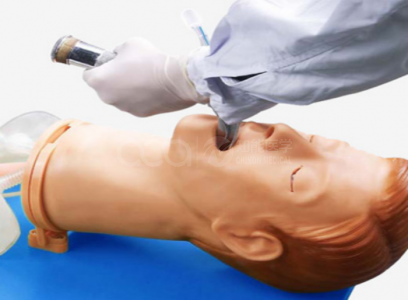
If your programme needs proof that a tube is at the right depth — not just a head that accepts one — the BIX-J52 is the model to shortlist. It pairs a full head-and-neck airway with an LCD that reports cannula position, a sensor system that detects cricoid pressure and intubation depth, and voice prompts, at a published reference price of $471.32. This guide explains what those features actually buy you, what the trainer cannot do, and how to compare it against cheaper static heads.

| Item | Detail |
|---|---|
| Model | BIX-J52 |
| Reference price | $471.32 (subject to order quantity) |
| Anatomy | Head and neck with accurate airway landmarks for Sellick manoeuvre and laryngospasm teaching |
| Intubation routes | Oral and nasal; trachea, pharynx and oesophagus |
| Supraglottic devices | Laryngeal mask and composite tube |
| Airway clearance | Obstruction clearance, oral/oropharyngeal/nasopharyngeal suction, bronchoscopic suction |
| Ventilation | Bag-mask and bag-tube ventilation drills |
| Feedback | LCD cannula-position display, cricoid-pressure sensing, intubation-position detection, voice prompt |
| Realism extras | Simulated sputum, observable lung movement, audible breath sounds |
| Certification shown | ISO 9001 / ISO 14001 / ISO 45001 factory certification |
| Typical buyers | Anaesthesia and ICU skills labs, paramedic programmes, respiratory therapy schools |
Three things, and they matter separately: where the tube sits, whether cricoid pressure is being applied, and whether ventilation is reaching the lung. The display reports cannula position at different depths, so a trainee who advances past the carina sees it on screen rather than hearing about it in the debrief. The sensor system adds cricoid-pressure monitoring and automatic position detection, and a voice prompt flags the state out loud — useful when one instructor is running six trainees.
Depth confirmation is not cosmetic. The Difficult Airway Society guidelines treat unrecognised oesophageal intubation and delayed recognition of misplacement as the dominant preventable failures in unanticipated difficult intubation, which is why every step of the 2015 algorithm is built around confirming placement before proceeding [1]. A trainer that shows depth turns that confirmation into a habit instead of a checklist item.
Sellick's original description used cricoid pressure to control regurgitation of stomach contents during induction [2]. Modern practice is narrower: apply it when regurgitation risk is real, and release it if it worsens the view. The BIX-J52 lets you teach both halves of that sentence, because the sensor reports how much pressure is applied and the airway still accepts a laryngeal mask and a composite tube with the pressure on.
That combination is what separates a teaching model from a practice dummy. Trainees can run the sequence — preoxygenate, apply pressure, laryngoscope, pass tube, confirm on screen, ventilate, watch lung movement — and then repeat it with the pressure released to see how the view changes.
Four features get less attention in the brochure than intubation, but they are usually what justifies the purchase to a finance committee:
Q1. Is the BIX-J52 a full-body manikin?
No. It is a head-and-neck airway trainer. If you need chest compressions or full-body scenarios, pair it with a resuscitation manikin instead.
Q2. What is the reference price?
$471.32 per unit, subject to order quantity. Freight, spares and any custom voice prompt are quoted separately.
Q3. Can it be used for bronchoscopy practice?
Yes — transoral and nasal bronchial suction through a bronchoscope is listed as a supported procedure, along with oral, oropharyngeal and nasopharyngeal suction.
Q4. Does it give objective feedback or only visual?
Both. The LCD reports cannula position, the sensor system detects cricoid pressure and intubation position, and a voice prompt announces the state.
Q5. What are the running costs?
Airway liners, lungs and simulated sputum are the consumables. Ask for the replacement interval per airway unit and a price list before comparing total cost of ownership.
Q6. Can we see a demonstration before ordering?
Yes. Email adaanatomy@adaanatomy.com with your cohort size and destination port, and ask for a video of the cricoid-pressure and depth feedback in use.
For the specification sheet, consumable price list and a landed-cost quotation: adaanatomy@adaanatomy.com. Production follows ISO 45001 management practice; CE documentation is available for EU procurement.
