ADA MED SUPPLY LIMITED
Phone:+86 13383897707
Tel:+86-0379-65160607
Email:adaanatomy@adaanatomy.com


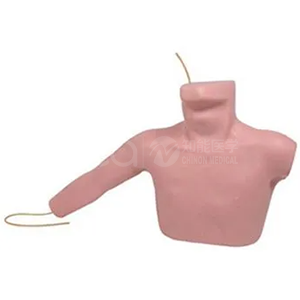
Article tag: Peripheral Puncture & Central Vein Cannula Model BIX-L67A L67A
Product Line | BIX Nursing Training Models (all types) |
Summary | BIX nursing models for every skill type — full-function manikins, injection/venipuncture, wound, catheter, suction, BP, obstetric, and pediatric trainers. (148 chars) |
Classification | Fidelity × Skill domain × Patient population |
Key Models | H130B, HS3, H30, HS7, H85, H58, H10, F55, FS, H140, CPR160A |
Application | Nursing schools, OSCE, licensure prep, hospital training |
Certification | ISO 9001 / ISO 14001 / ISO 45001 manufacturing |
Nursing curricula cover dozens of distinct clinical procedures, and no single model trains them all. Classifying nursing models along three dimensions turns model selection from guesswork into a curriculum decision:
Dimension | Answers the Question |
Fidelity level | How much feedback does the skill require? |
Skill domain | Which procedures does the course cover? |
Patient population | Who are the learners' future patients? |
The classification also has an evidence basis: simulation works when it provides feedback, repetition, and curriculum integration (Issenberg et al., 2005) — criteria that differ by model type, so matching type to objective matters.
Level | Model Type | Feedback | Best For | Example |
1 | Basic functional | Minimal — anatomical practice | Familiarization, basic positioning | Basic nursing manikin |
2 | Standard skill trainer | Tactile realism | Single-procedure repetition | Injection arms, wound trainers |
3 | Electronic / measured | Objective data (depth, pressure, rate) | Assessment, competency verification | Electronic CPR manikins |
4 | Comprehensive system | Multi-system physiological simulation | Scenario and OSCE integration | Full-function manikin (22 procedures) |
Selection insight: higher fidelity supports assessment and complex scenarios; lower fidelity supports high-volume repetition. Most programs need a mix, not a single level (Harder, 2010).
The most practical classification for curriculum planners — eight skill domains, each with dedicated model types:
Skill Domain | Procedures Trained | BIX Model Types |
Injection & vascular access | Venipuncture, IV infusion, IM injection, arterial puncture | HS3 venipuncture arm, H30 upper-arm IM, HS5 arterial puncture |
Vital signs | Blood pressure measurement | HS7 BP simulator |
Airway & respiratory | Suctioning, tracheostomy care | H85 suction trainer, H58 tracheotomy model |
Wound & skin care | Pressure ulcer staging, dressing, measurement | H10 pressure ulcer model |
Catheter & elimination | Catheterization, enema, elimination care | Catheterization trainers |
Obstetric & gynecological | Childbirth, gynecological exam, cord care | F55 childbirth, FS gynecological exam, F132 cord care |
Pediatric & neonatal | Infant care, neonatal CPR | H140 infant nursing, CPR160A neonatal CPR |
Comprehensive full-function | 20+ nursing procedures on one body | H130B full-function manikin |
Evidence insight: students trained on integrated full-body models outperformed students trained only on fragmented single-function trainers by 22% in combined-scenario assessments — because practicing multiple procedures on one "patient" builds clinical reasoning (Cant & Cooper, 2017). Domain planning should therefore include at least one integrated model alongside specialists.
Population | Training Focus | Model Categories |
Adult | Core nursing skills, general wards | Full-function manikin, injection, wound models |
Pediatric | Child care, pediatric assessment | Pediatric nursing manikins |
Neonatal | Newborn care, cord care, neonatal resuscitation | Infant manikins, cord care, neonatal CPR |
Obstetric | Delivery, postpartum, gynecological exam | Childbirth and gynecological models |
Geriatric | Pressure ulcers, immobility care | Wound care, positioning models |
1. One integrated model per skills lab. The NCSBN National Simulation Study — the largest in nursing education — showed replacing up to 50% of clinical hours with simulation on integrated simulators produced equivalent licensure outcomes (Hayden et al., 2014). An integrated full-function manikin is the fleet anchor.
2. Specialists for high-volume skills. Injection and venipuncture are among the most-taught nursing skills; dedicated arms (HS3, H30) allow unlimited repetition without wearing the full-body model.
3. Scenario models for clinical reasoning. Obstetric and pediatric models (F55, FS, H140) enable the scenario practice that builds reasoning (Cant & Cooper, 2017).
4. Plan for debriefing. Debriefing is consistently identified as the most important component of simulation learning (Shinnick et al., 2011) — choose models whose feedback data supports structured debriefs (electronic displays, assessment modes).
School Size | Recommended Mix |
Small program (1 lab) | 1 full-function manikin + 2 injection arms + 1 wound model |
Mid-size (2 labs) | 2 full-function + injection/vital signs set + obstetric + pediatric |
Large/regional center | Full set across all 8 domains + electronic assessment models |
For fleet configuration and institutional pricing: adaanatomy@adaanatomy.com.
Q1: How many types of nursing models are there? A: Models are classified along three dimensions: fidelity (basic → comprehensive), skill domain (8 categories from injection to obstetrics), and patient population (adult, pediatric, neonatal, obstetric, geriatric). Combining dimensions gives dozens of distinct model types.
Q2: What is the difference between a skill trainer and a full-function manikin? A: A skill trainer (e.g., venipuncture arm) practices one procedure with high tactile realism; a full-function manikin (e.g., H130B) integrates 20+ procedures on one body, enabling combined-scenario practice that builds clinical reasoning — which evidence shows improves assessment performance (Cant & Cooper, 2017).
Q3: Can simulation really replace clinical hours? A: The NCSBN National Simulation Study found that replacing up to 50% of clinical placement hours with simulation on integrated simulators produced equivalent outcomes on licensure exams (Hayden et al., 2014). Many accreditation frameworks now permit this substitution.
Q4: Do we need electronic models? A: If your program assesses competency objectively, yes — electronic models provide measurable feedback (depth, rate, pressure) that supports both assessment and debriefing, which is the most influential component of simulation learning (Shinnick et al., 2011).
Q5: What is the typical service life and consumable cost? A: Quality models last 8–10 years with consumables (lung bags, skins, tubing) replaced on usage schedules. Always request consumable price lists before purchase.
Q6: What is the MOQ and delivery timeline? A: Typically MOQ 1 unit, air freight 7–10 business days; institutional orders of 3+ units qualify for consolidated sea freight (30–45 days). Email adaanatomy@adaanatomy.com. for a formal quotation.
The NCSBN National Simulation Study: A Longitudinal, Randomized, Controlled Study Replacing Clinical Hours With Simulation — Hayden et al. (2014), J Nurs Regul 5(2):S3–S40
Use of Simulation-Based Learning in Undergraduate Nurse Education: An Umbrella Systematic Review — Cant & Cooper (2017), Nurse Educ Today 49:63–71
Use of Simulation in Teaching and Learning in Health Sciences: A Systematic Review — Harder (2010), J Nurs Educ 49(1):23–28
Features and Uses of High-Fidelity Medical Simulations That Lead to Effective Learning: A BEME Systematic Review — Issenberg et al. (2005), Med Teach 27(1):10–28
Debriefing: The Most Important Component in Simulation? — Shinnick et al. (2011), Clin Simul Nurs 7(3):e105–e111
