ADA MED SUPPLY LIMITED
Phone:+86 13383897707
Tel:+86-0379-65160607
Email:sophia@adahealthy.com


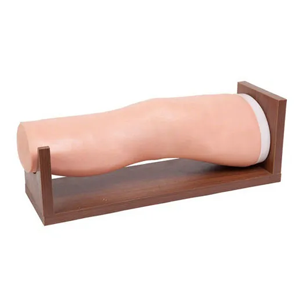
The hip joint intraluminal injection model is a simulation tool used to train medical students and doctors to perform hip joint injection operations. By simulating the anatomical structure and joint cavity of the hip joint, trainees can practice injection techniques in a risk-free environment, improving their surgical skills and clinical operation levels. The following is the operation process of the hip joint intraluminal injection model.
Features
1.Can puncture repeatedly, standard puncture sites facilitate to acupuncture and there is realistic feeling when needle inserts into veins;
2.A single valve can inject simulated liquid of bursa mucosa into bursa mucosa repeatedly;
3.Automatic sealing of bursa mucosa;
4.Skin surface can be cleaned by suds
5.Simulate a adult legs appearance and internal structure, the standard of the knee joint anatomy accurately puncture position, with the tibia, the tibia bone, deputy ligament, cruciate ligament, patellar ligament, the structure of the fat pad, the meniscus and synovial bursa.
6. The knee joint can be proved to teach the patient position;
7. Training procedure related to touch technology.
Made of imported polymer materials, clear layers of skin and muscle, with integrated knee anatomical structure, and manifest body surface symbols.
1. preparations
Before conducting the injection operation, it is necessary to prepare the required tools and equipment first. Make sure to use sterile injection needles, syringes and related medications. At the same time, check the integrity of the hip joint intraluminal injection model to ensure that all joint areas and markings are clearly visible and can accurately simulate the real injection environment.
2. Locate the injection site of the hip joint
According to the anatomical markers provided by the model, trainees need to accurately locate the injection site in the hip joint cavity. Usually, the target of hip intra-articular injection is the joint cavity at the front part of the hip joint. According to standard clinical techniques, the positioning point should be on the anterior side of the hip joint, approximately 2 to 3 centimeters away, close to the hip flexion position. Help accurately locate the injection point through the marks on the model.
3. Disinfection of the skin and preparation for injection
Use disinfectant or alcohol cotton balls to thoroughly clean the injection site to ensure that the operation area is sterile. Next, connect the injection needle and the syringe properly, and draw an appropriate amount of the simulated drug or normal saline (optional according to the training purpose).
4. injection operation
Hold the syringe and syringe tube, and insert the needle slowly and steadily into the injection point marked by the model at the standard operating Angle (usually 45 degrees or a slightly right Angle). At this point, trainees should be careful to avoid needles that are too deep or too shallow to prevent accidental injury to other tissues. After touching the hip joint cavity, slowly push the syringe to simulate the injection process of the drug or liquid. The trainee should observe the feedback of the liquid flow to ensure the smooth progress of the injection.
5. Complete operation and cleaning
After the injection is completed, slowly pull out the needle and press the injection site again with a cotton ball to simulate the hemostasis operation in clinical practice. Finally, clean and disinfect the equipment to ensure that the models and tools are clean for the next use.
