ADA MED SUPPLY LIMITED
Phone:+86 13383897707
Tel:+86-0379-65160607
Email:sophia@adahealthy.com


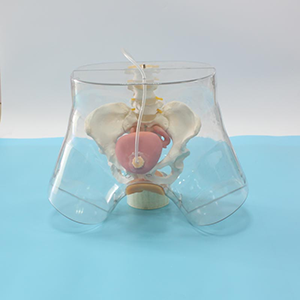
Curettage (also known as uterine curettage or uterine curettage) is a common procedure in women's reproductive health, widely used to treat endometrial abnormalities, diagnostic curettage, and induced abortion. However, for beginners, this surgery requires high precision, involves complex steps and has certain risks, so how to effectively train has become a major challenge in medical education. In recent years, as a training tool, advanced transparent curettage model has gradually occupied a place in medical education. So, could this model become an indispensable tool in curettage training?
First, the characteristics and advantages of transparent curettage model

Advanced transparent gua Sha model
1. Real operating experience
The advanced transparent curettage model is designed with transparent materials, which can accurately simulate the uterus and its internal structure, especially in terms of visual training. Students can visually see the actual operation process of curettage, clearly understand the impact of different operations on the endometrium and uterine cavity, and effectively improve surgical skills.
2. Reduce clinical risk
In a real-world surgical setting, curettage involves certain risks, including damage to the uterine wall, cervix, or other tissues. Through simulation training, students can be familiar with the operation process and master the precision of the operation without causing any actual injury, thus reducing the risk in real surgery.
3. Provide personalized training
The transparent curettage model allows students to train at different levels according to their own mastery. Whether it is a beginner or a student with some experience, they can improve the skills of a certain link through repeated operations.
2. Data support and effect verification
A number of studies have shown that the use of simulation models for medical training can significantly improve students' operational level and clinical judgment ability. Specific to the transparent curettage model, data support shows that through model training, the accuracy, fluency and operation time of the trainees in the surgical operation have been improved. Further data also showed that participants who underwent simulation training had a significantly lower error rate in real surgery than those who did not receive simulation training.
- One study showed that participants trained with the transparent curettage model had shorter surgical procedures, higher accuracy, and smoother postoperative recovery.
- Another survey shows that 85% of the trainees believe that the training of transparent curettage model has helped them effectively reduce the tension and operational errors in the operation, and enhance the confidence in the operation.
3. Application and influence in teaching
The transparent curettage model is not only a tool to improve operational skills, it also has significant educational value. In teaching, teachers can show various techniques and steps of curettage through the model, so that students can practice repeatedly without the actual operation risk. At the same time, the transparent design of the model allows students to clearly see the details of the surgical process, thereby increasing their attention to the accuracy and safety of the operation.
conclusion
In summary, the advanced transparent curettage model can indeed become an indispensable tool in the training of curettage surgery. It simulates real surgical scenarios to help trainees familiarize themselves with the procedure and improve their skills in a low-risk environment, thus laying a solid foundation for clinical practice. With the continuous improvement of teaching demand and technological progress, transparent curettage model will play a greater role in medical education and become a standard tool for medical students, nurses and other medical personnel training.
