ADA MED SUPPLY LIMITED
Phone:+86 13383897707
Tel:+86-0379-65160607
Email:sophia@adahealthy.com


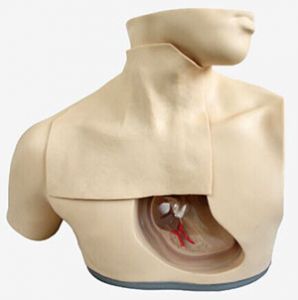
The role of the parenteral nutrition care model in multidisciplinary collaboration is indeed very important, especially in the management of complex cases, to facilitate communication and coordination between different healthcare team members, thereby improving patient outcomes and overall health.
1. Promote multidisciplinary communication and collaboration
By providing a common training platform for doctors, dietitians and nursing staff, the parenteral nutrition nursing model helps different professionals understand the implementation process, complication management and treatment goals of parenteral nutrition. The data show that by using this model for simulation training in multi-disciplinary teams, the efficiency of collaboration between team members can be significantly improved, and misunderstandings and information transmission errors can be reduced in actual clinical practice.

Parenteral nutrition Nursing Model
2. Improve the precision of the treatment plan
Multidisciplinary cooperation can develop a more comprehensive treatment plan for patients. The parenteral nutrition care model provides a clear operational framework for each team member, making the treatment plan more precise in practice. For example, dietitians adjust nutritional formulations based on patient needs simulated by the model, while doctors adjust treatment regimens in time according to clinical changes in patients. Research shows that this multidisciplinary cooperation model can effectively improve the personalized and scientific treatment plan, and thus improve the treatment effect of patients.
3. Optimize patient safety and treatment outcomes
Although parenteral nutrition therapy can significantly improve the nutritional status of patients, it is also accompanied by certain risks, such as infection and metabolic abnormalities. Through multidisciplinary collaboration, various professionals can jointly identify potential risks and intervene in model training. For example, caregivers learn how to monitor patients' nutritional inputs and outputs, and doctors adjust treatment regimens based on the latest clinical data. This collaborative model has helped to reduce the incidence of complications and improve patient safety and quality of life.
4. Data support and academic progress
Academic research shows that the application of parenteral nutrition nursing model not only has a direct impact on clinical treatment, but also provides data support for research in related fields. The data from the simulation training can be used to evaluate the effects of different nutritional programs and provide empirical evidence for the formulation of nutritional support treatment guidelines in the future. The multidisciplinary team has promoted academic progress in the field of parenteral nutrition through the sharing and discussion of model research results.
conclusion
The role of the parenteral nutrition care model in multidisciplinary collaboration is critical, which not only improves the precision of treatment, but also enhances patient safety and quality of life by facilitating close collaboration between different specialties. Data support shows that the application of the model can optimize treatment options, improve treatment outcomes, and promote the development of related academic fields. Therefore, in modern medical treatment, the application of parenteral nutrition nursing model has a value that cannot be ignored.
