ADA MED SUPPLY LIMITED
Phone:+86 13383897707
Tel:+86-0379-65160607
Email:sophia@adahealthy.com


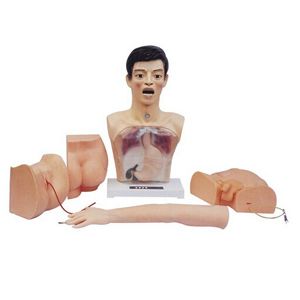
Basic nursing is one of the most important parts of medical nursing education, and it is very important to train nursing talents with solid operation skills and clinical literacy. In traditional nursing education, students mostly master basic nursing skills through theoretical study and clinical practice, but due to the limited time and resources of clinical practice, students often find it difficult to obtain sufficient operational experience in clinical practice. Basic nursing practice operation model came into being. As a simulation teaching tool, it can help students to operate repeatedly in the simulation environment and improve their practical ability. This paper will discuss the role of the basic nursing practice operation model in improving the practical ability of nursing students, and analyze it in combination with academic research and clinical data.
Educational value of basic nursing operation model

Operational Model of Primary Nursing Practice
1. Simulation training and practical ability improvement
The basic nursing operation model provides a safe and controllable practice platform for students by simulating common nursing operations (such as position change, intravenous injection, blood pressure measurement, basic life support, etc.). In the absence of real patients, students can practice the operation repeatedly to reduce the nursing errors caused by improper operation in actual clinical work. For example, through the simulation of intravenous injection operation, students can master acupuncture techniques, drug dispensing and injection methods without risk, so that they can complete the operation more skillfully in the actual clinical practice.
2. Improve students' self-confidence and independent operation ability
Through repeated practice and teacher feedback, students can gradually eliminate the uncertainty and tension in clinical operation during the training of basic nursing practice operation model. This simulation exercise can greatly improve the self-confidence of the students, so that they can handle the basic nursing work more autonomously and independently after entering the clinical position. According to one study, nursing students trained in operational models experienced an approximately 30% increase in confidence in their nursing skills upon entering clinical practice.
Data support: model training and practical ability improvement
1. Improve the accuracy of operation skills
According to a study in the journal Nursing Education and Practice, students who used the operational model of basic nursing practice showed significantly better accuracy in practical skills than students who learned in the traditional way. Studies have shown that nursing students who receive simulated training improve their accuracy in skills such as position change, oxygen manipulation, and intravenous injection by an average of 25% to 30%. Through repeated operation of the model, students can not only improve the proficiency of the skills, but also master the details and precautions in the operation process, reducing the possibility of errors.
2. Shorten the learning curve
A study of nursing schools found that students trained using the basic nursing model were able to master basic nursing skills in a shorter period of time and were more proficient in their clinical practice. Research data show that after simulation training, the success rate of nursing students in the first clinical nursing operation is improved by 20% to 25%. In addition, students' ability to respond to practical problems and problem solving skills are also improved.
Clinical significance: Improve clinical work efficiency and patient safety
Basic nursing operation model not only significantly improves students' practical ability, but also directly affects the quality of clinical nursing and patient safety. Through simulation training, students are able to practice continuously in an environment free from clinical stress, reducing medical errors caused by improper practices. For example, in the process of intravenous injection, through model training, students can better master the selection of injection sites, drug pairing, injection skills, etc., which significantly reduces the harm of patients caused by non-standard operations in clinical work.
Clinical feedback: A hospital nursing department conducted a survey on the work performance of new nurses, and found that the frequency of operation errors in handling basic nursing tasks was about 35% lower for nurses who had received basic nursing operation model training than for those who had not received simulation training. In addition, in terms of patient care satisfaction, caregivers in the simulated training group also performed significantly better than those in the traditional training group, and patients' trust and sense of security increased by more than 20%.
conclusion
As an innovative teaching tool, the basic nursing practice operation model has been widely used in nursing education, which can effectively improve the practical ability of nursing students. By providing a risk-free training platform, the model helps students improve the accuracy and fluency of their operational skills through repeated practice, thereby enhancing students' confidence and independence. Both data support and clinical feedback show that the basic nursing practice operation model can significantly improve the practical ability of students, and show higher operational accuracy and adaptability after entering the clinical practice. Therefore, the basic nursing practice operation model is undoubtedly an important tool to improve the quality of nursing education and strengthen the safety of patient nursing, and has a wide range of application prospects.
