ADA MED SUPPLY LIMITED
Phone:+86 13383897707
Tel:+86-0379-65160607
Email:sophia@adahealthy.com


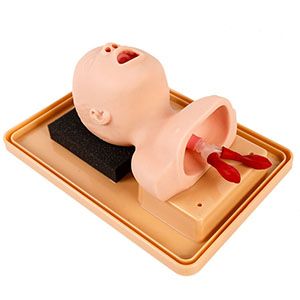
Improve your skills. Does the newborn Tracheal intubation training model really work? This is a question worth exploring in depth. In the field of modern medicine, neonatal tracheal intubation is a vital first-aid skill, which is of great significance for saving newborn lives. However, it is not easy to learn and master this skill, which requires medical staff to explore and practice in practice. At this time, neonatal tracheal intubation training model is particularly important.
It is a highly simulated teaching tool that simulates the physiological structure and breathing mechanism of newborns, providing a near-real training environment for medical staff. Through the use of this model, medical personnel can perform endotracheal intubation operation in simulated emergency situations, so as to familiarize themselves with the operation process, master the operation skills, and improve the ability to respond to emergencies.

Practice has proved that it does play an important role in improving the skills of medical staff. First of all, the high degree of simulation of the model makes the training more close to the actual combat, and the medical staff can operate in the simulated real environment, so as to better understand and remember the operation process. Second, the model can also give immediate feedback based on the operation of the medical staff, helping them to identify shortcomings in the operation and improve. This immediate feedback mechanism helps health care workers improve their skills quickly.
In addition, it has the advantages of economy and convenience. Compared to real clinical procedures, training using models avoids the risk of harm to newborns due to improper procedures, while reducing healthcare costs. Moreover, the model can be trained anytime, anywhere, regardless of time and place, providing more flexible learning opportunities for healthcare professionals.
To sum up, the neonatal tracheal intubation training model does play an important role in improving the skills of medical staff. It can not only provide a near-real training environment for medical staff, but also help them identify shortcomings in operations and make improvements. However, we also need to recognize the limitations of the model and make a comprehensive analysis and judgment combined with clinical practice experience. Only in this way can we better master the skills of neonatal tracheal intubation and escort the life safety of newborns.
