ADA MED SUPPLY LIMITED
Phone:+86 13383897707
Tel:+86-0379-65160607
Email:sophia@adahealthy.com


Article tag: Male body acupuncture model,acupuncture model
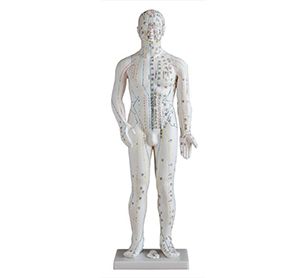
Male body acupuncture model plays a vital role in TCM acupuncture teaching and research, which is not only the bridge of education inheritance, but also the assistant of scientific exploration.
Role in teaching
1. Intuitive teaching tools
The male acupuncture model has become an indispensable visual teaching tool in acupuncture teaching with its realistic form and accurately marked meridian points. It can help students intuitively understand the anatomy of the human body, the direction of meridians and the location of acupoints, and transform complex theoretical knowledge into visual images, so that students are easier to understand and master.

2. Practice operation platform
In the process of acupuncture learning, practical operation is an essential link. The male body acupuncture model provides a safe and repeatable platform for students to practice. Students can practice acupuncture operation on the model, get familiar with the acupuncture technique and depth, and improve the accuracy and stability of the operation. This practice not only helps to consolidate theoretical knowledge, but also cultivates students' hand feel and experience, laying a solid foundation for future clinical practice.
Role in scientific research
1. Scientific research experiment carrier
The male body acupuncture model plays an important role in acupuncture research. Researchers can use the model to conduct experimental studies on the mechanism of acupuncture and the evaluation of curative effect. By simulating the physiological environment and pathological state of the human body, researchers can observe and analyze the influence and effect of acupuncture on the human body, and provide reliable data support for scientific research and clinical application of acupuncture and moxibustion.
To sum up, the male acupuncture model plays an irreplaceable dual role in TCM acupuncture teaching and research. It is a bridge of educational inheritance, helping students to master acupuncture knowledge and skills; It is also an assistant for scientific exploration, providing experimental carriers and innovation platforms for researchers.
